In an era of rapid climate change and environmental degradation, the global community is increasingly looking back to nature for answers. Nature-based Solutions (NbS) represent a strategic shift in how we address societal challenges, moving away from purely industrial fixes toward the protection, management, and restoration of our natural ecosystems.
What are Nature-based Solutions?
According to the IUCN, Nature-based Solutions are actions designed to protect, sustainably manage, and restore ecosystems. These actions work to address major societal hurdles while simultaneously providing benefits for both human well-being and biodiversity. Essentially, NbS treat the power of nature and functioning ecosystems as a form of “natural infrastructure” that provides essential services to society and the environment.
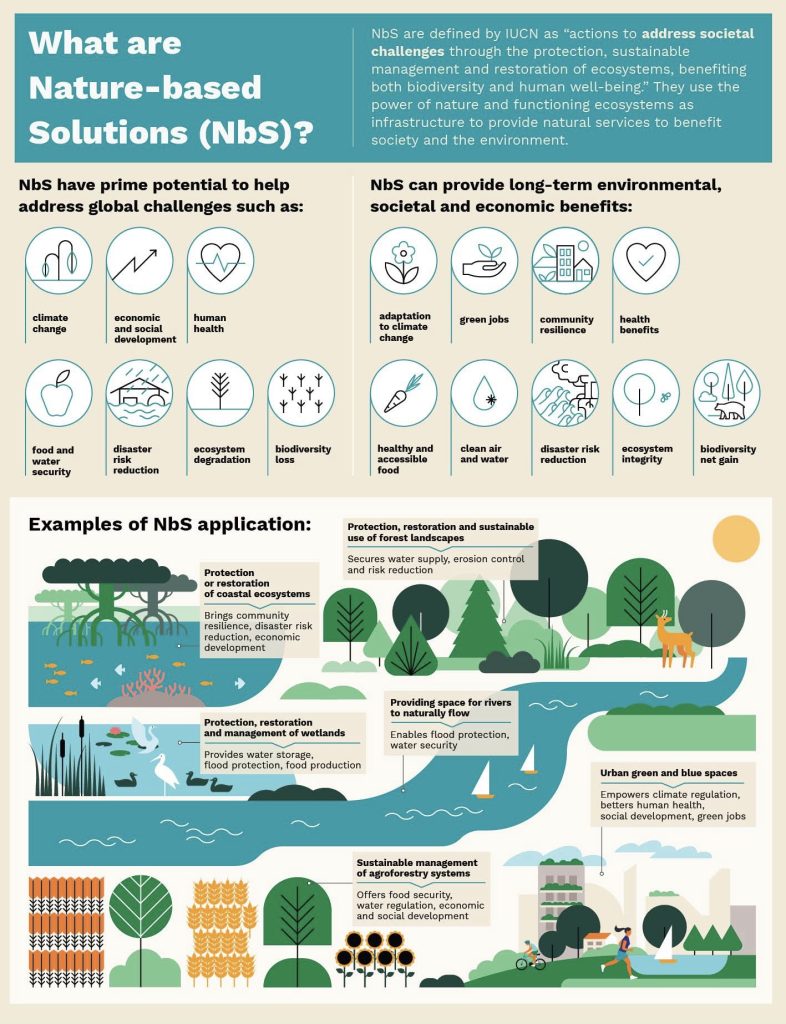
Global Challenges Addressed by NbS
NbS have the potential to tackle some of the most pressing issues of the 21st century. The infographic highlights eight primary areas where these solutions can make a significant impact:
- Climate Change: Using nature to sequester carbon and regulate temperatures.
- Economic and Social Development: Creating sustainable growth through natural resources.
- Human Health: Reducing pollution and providing spaces for physical and mental well-being.
- Food and Water Security: Ensuring stable crops and clean water sources.
- Disaster Risk Reduction: Using natural barriers to mitigate the impact of storms and floods.
- Ecosystem Degradation: Reversing the damage done to our natural landscapes.
- Biodiversity Loss: Protecting the variety of life on Earth.
The Triple Bottom Line: Environmental, Social, and Economic Benefits
Beyond solving immediate problems, NbS offer long-term, multi-dimensional rewards. These solutions don’t just fix a single issue; they create a ripple effect of positive outcomes:
- Environmental: Increases ecosystem integrity, ensures “biodiversity net gain,” and provides clean air and water.
- Societal: Enhances community resilience, provides health benefits, and ensures access to healthy food.
- Economic: Spurs the creation of “green jobs” and supports adaptation to climate change, which protects long-term investments.
Examples of NbS in Action
The infographic illustrates several ways NbS can be applied across different landscapes:
| Application | Primary Benefits |
| Forest Landscapes | Secures water supply, provides erosion control, and reduces environmental risks. |
| Coastal Ecosystems | Brings community resilience and disaster risk reduction (e.g., mangroves protecting against storm surges). |
| Wetlands | Provides water storage, natural flood protection, and food production. |
| River Flow Management | Providing space for rivers to flow naturally enables better flood protection and water security. |
| Agroforestry Systems | Offers food security and water regulation while boosting local economic development. |
| Urban Green & Blue Spaces | Empowers climate regulation in cities, improves human health, and creates green jobs. |
Conclusion
Nature-based Solutions remind us that the environment is not a separate entity to be exploited, but a sophisticated partner in our survival. By investing in the restoration of forests, the protection of wetlands, and the greening of our cities, we can build a resilient future that honors the delicate balance of our planet.