Aquatic ecosystems found in and around water bodies play a crucial role in sustaining biodiversity, supporting fisheries, regulating climate, and protecting vulnerable coastal regions. Scientists classify these ecosystems into freshwater and marine environments, each shaped by physical, chemical, and biological factors. Temperature, dissolved oxygen, nutrient availability, and sunlight determine the richness and distribution of life within these waters. Freshwater bodies such as lakes, ponds, rivers, streams, springs, and wetlands contain low salinity and support diverse species. Lakes and ponds, known as lentic ecosystems, include algae, rooted plants, and distinct zones based on depth and light—ranging from the shallow littoral zone to the dark profundal region. Flowing-water systems, or lotic ecosystems like rivers and streams, support insects, fish such as trout and eel, and mammals including river dolphins. Wetlands, with their saturated soils and seasonal flooding, remain among the most biologically productive ecosystems, naturally filtering pollutants and regulating floods.
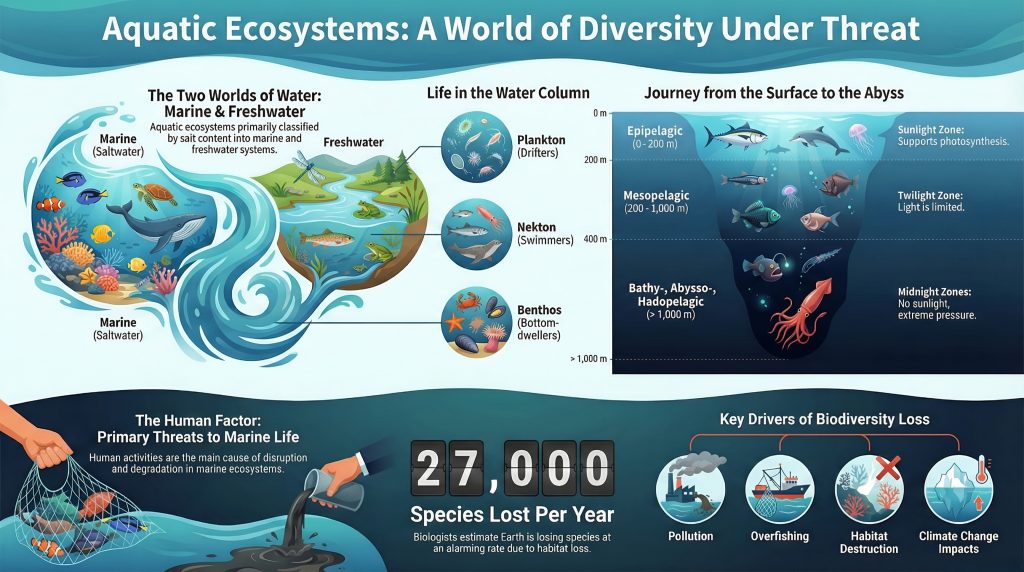
Marine ecosystems, which cover over seventy percent of the planet, are defined by high salinity and enormous environmental complexity. They host plankton, nekton, and benthic organisms, each occupying different niches in the water column or on the seabed. Coastal waters make up less than ten percent of global ocean area yet harbor ninety percent of marine species and sustain major commercial fisheries. Sunlit euphotic waters enable photosynthesis and oxygen production, while the deep, dark aphotic zone—constituting most of the ocean’s volume—supports uniquely adapted life forms. These ecosystems provide essential ecological services, including CO₂ absorption, nutrient cycling, climate moderation, and natural protection from storms.
Despite their importance, aquatic ecosystems worldwide are under increasing pressure from human activities. Coastal development destroys wetlands and mangroves; overfishing depletes commercially important species; agricultural runoff introduces fertilizers, pesticides, and livestock waste; and oil spills and sewage add further pollution. Habitat destruction from trawling, invasive species introduced by humans, and the accelerating impacts of climate change—rising temperatures, ocean acidification, and sea-level rise—threaten both freshwater and marine environments. Many natural resources, especially fisheries, are being exploited at unsustainable rates, leading to declines in species populations and weakening ecosystem health.
A clear example of these challenges can be seen in the Barishal–Bhola coastal region of Bangladesh, where rapid and unplanned development has caused alarming degradation of aquatic ecosystems. Wetlands and canals have been narrowed or filled due to expanding settlements, shrimp farming, and brick kilns. Pollution from agricultural runoff and urban waste has reduced water quality, harming phytoplankton and small indigenous fish species. Local fishing communities report diminishing catches of hilsa, shrimp, and various freshwater species. The loss of mangrove buffers along rivers and coastlines has made low-lying villages more vulnerable to cyclones and tidal surges. During recent cyclones such as Amphan, areas with degraded mangroves experienced deeper flooding, embankment breaches, and prolonged waterlogging, highlighting the direct connection between ecosystem degradation and disaster severity.
These issues connect closely with the work of the Organization of Disaster Management (ODM), which aims to strengthen resilience and promote sustainable environmental practices. ODM can play a significant role by raising awareness about the importance of wetlands and mangroves, educating communities about pollution control, and advocating for sustainable fishing and responsible land use. Through research, field surveys, and student-led monitoring activities, ODM members can assess water quality, document biodiversity changes, and identify pollution hotspots. Collaborative initiatives with local government bodies and conservation groups, such as wetland restoration or mangrove plantation programs, can further support long-term resilience. Additionally, ODM can engage university students in cleanup drives, awareness campaigns, and environmental education efforts that link ecosystem conservation with disaster risk reduction.
In a country as climate-vulnerable as Bangladesh, protecting aquatic ecosystems is essential not only for biodiversity but also for safeguarding communities from storms, flooding, and resource loss. The involvement of organizations like ODM can help bridge scientific understanding, youth engagement, and community action, ultimately contributing to a more resilient and environmentally secure future.